Bırch's road to $10 million a year online in three years starts with the regulars already in its cafes.
Birch wants $10 million a year online within three years. This plan gets there without asking Birch to carry a loss: on our planning numbers the program has paid for itself by month 12, and Birch never has more than about $110,000 in at any one time. It starts with the people who already buy Birch every morning, and three numbers decide every step up in spend.
Every number from outside our agency sits on a catalogue card, like the ones in a library drawer: the real page it came from with the figure highlighted, what kind of source it is, what it covers, and a link. Tap a card's picture to read the page up close. Planning ranges are marked as planning ranges.
1
Why listen to us.
Well over $100 million in Facebook ad spend has passed through our hands. We've run campaigns for Warner Brothers, Tony Robbins, Robert Kiyosaki and Gary Vaynerchuk, and for supplement, consumable and skincare brands that live or die on repeat orders, just like coffee.
We're a boutique team of specialists, and we stay small on purpose. We pay to keep the best people and keep every client list short, because scaling a brand fast takes a kind of focus that a big team of mediocre hires, each juggling too many clients, can never give. We would rather have seven clients who stay for years than fifty who leave within months.
Facebook made a case study of our work
We're a Facebook Managed Partner Agency. Facebook published a case study of our client work: a life coaching institute spending more than $250,000 a month on ads, earning a 5x return on ad spend and a 33% lift in sales. Facebook also invited us to a closed-door event for its top agencies. Our specialists have run campaigns at $75,000 a day and more.
Facebook case study
Mastering return on investment Facebook for Business, Success Story
5X return on ad spend; 33% increase in sales; 1.5 million potential customers reached a month; 2X email subscribers
A life coaching institute's Facebook ads, run by our team. Monthly spend of $250,000+ is from our own records.
A brand that was stuck, and how it got unstuck
Infinite Age, a supplement brand, couldn't get past $3,500 a day in ad spend: every attempt to spend more killed the margin. We rebuilt its offer around what a customer is worth over a year, gave each kind of buyer its own message and page, and restructured the account so winning ads kept running. Four months later it was spending $45,000 a day, and its Shopify store sold $3.46 million in those four months, 77% more than in the period before. Across every channel it sold, revenue reached $7,254,984 over the same four months, a blended return of $2.17 for every dollar of ad spend.
“You guys have been the game changer.”
Client messageChecked 15 Nov 2026
Russ Symes, founder and CEO of Infinite Age Message to Robert Grant, 3 August
“Yes. You can quote me. You guys have been the game changer.”
Shown with his permission. The spend and Shopify figures above are from our Infinite Age case study: Shopify store sales, 4 April to 4 August, against the four months before; blended revenue and return across all sales channels for the same four months.
He took a coffee brand from 41 stores to 1,500
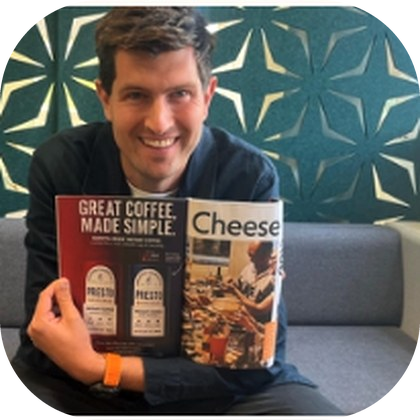
James Hagerty founded Presto Coffee in 2018 and took it from 41 supermarket stores to 1,500, while it sold on Amazon at the same time. He knows what a retailer asks for before it says yes. He has worked with us for years, and he is part of the team on this project.
Company documentChecked 15 Nov 2026
Presto Coffee investor deck: roadmap Presto Coffee, shared by Robert Grant, 13 Nov 2026
From 41 supermarket stores to 1,500; Waitrose Oct 2025, Tesco Nov 2025, Co-op and Sprouts Mar 2026, Morrisons Aug 2026
A private investor deck; store count on page 2, the roadmap shown here is page 3.
2
What the market is saying.
Americans drink coffee at home, and more of them buy it online
Two in three American adults drink coffee every day, about three cups each. Of the people who had coffee yesterday, 71% made it only at home, up from 63% in 2020. And the share of them who bought coffee online doubled in five years.
2020
7%
2025
14%
Yesterday's coffee drinkers who bought coffee online. National Coffee Association.
Trade association surveyChecked 15 Nov 2026
National Coffee Data Trends, Spring 2025 National Coffee Association, 15 Apr 2025
66% of adults drink coffee daily; 71% of yesterday's drinkers made it only at home; online buying doubled from 7% to 14%
US adults, survey fielded January 2025. Shares of people, not of sales.
The biggest coffee seller with public numbers is selling less on its own site
Black Rifle Coffee is the nearest thing to a public scorecard for coffee sold online. Its own-site sales fell from $143.2 million in 2023 to $117.6 million in 2025, and its subscribers from 225,800 to 159,900. Over the same two years its sales through stores and distributors grew from $225.1 million to $258.0 million.
Sold on its own siteSold through stores and distributorsSubscribers at year end
Computed from the two filings: own-site sales down 17.9%, subscribers down 29.2%, sales through stores up 14.6%, in two years.
Online sales are earned one subscriber at a time, even for a famous brand with years of ads behind it. So this plan doesn't open with a revenue promise. It opens with what one Birch subscriber is worth.
Swipe sideways to read the whole table.
Company filingChecked 15 Nov 2026
BRC Inc. fourth quarter and fiscal 2024 results (8-K, exhibit 99.1) Black Rifle Coffee, 3 Mar 2025
Direct to consumer $143,232k in 2023, $123,779k in 2024; 225,800 subscribers at end of 2023; wholesale $225,059k in 2023
Full years 2023 and 2024, dollars in thousands as filed.
Birch's own guide pairs one cup a day with one 12oz bag every two weeks. On the subscription, the first two bags cost $14.25 and every bag after that $16.15. That's about $416 a year for someone who stays twelve months, before shipping.
So $10 million a year means about 24,000 subscribers who stay. That's 15% of Black Rifle's base, and almost ten times what Equator Coffees built in six years (it hoped for 100 subscribers in 2016 and had 2,500 by 2022). It can be done, but not in one jump. So we split it into three years, and each year has to earn the next.
By the end of year 1: about 7,700 subscribers, a $3 million a year pace. Year 2: about 19,000, $8 million. Year 3: 24,000 or more, $10 million. Larger orders, gift subscriptions and one-off shop sales count toward the same total, so subscribers are the floor, not the ceiling.
Revenue at Birch's subscription prices, for subscribers who stay twelve months, before shipping. Computed from the cards below. 24,000 subscribers is $10 million a year.
Birch's own pageChecked 15 Nov 2026
Subscribe & Save: how often birchcoffee.com
One cup a day: one 12oz bag every 2 weeks (a bag makes about 24 cups)
Birch's own frequency guide, opened from the subscription page.
Our own store database lists 20,855 Shopify stores. Below are three well-known coffee brands from it, with each one's position in the list, what its own site says it sells, and how many ads it had live on Facebook and Instagram on 15 November. Birch isn't in the list, and it has no ads live.
Brand
Position in our list of 20,855
What its own site says it sells
Ads live on Facebook and Instagram, 15 Nov
Stumptown Coffee Roastersstumptowncoffee.com
Position#1,547
Beans, cold brew and subscriptions, online and in its shops
Live adsabout 160
Atlas Coffee Clubatlascoffeeclub.com
Position#2,130
A subscription of coffees from 50+ countries; first bag 50% off
Live adsabout 1,100
Cometeercometeer.com
Position#6,341
Coffee you make with just water or milk (from its ad)
Live adsabout 320
Birch Coffeebirchcoffee.com
Positionnot in the list
Beans for every brew method, instant, gear and a subscription
Live adsnone live
All three run ads on Facebook and Instagram right now. Birch runs none.
Swipe sideways to read the whole table.
Our own datasetChecked 15 Nov 2026
DTC Brand Database: 20,855 Shopify stores by niche Reach Global Media (Bogdan Radu), compiled around February 2026
Coffee brands and their positions in the list; birchcoffee.com is not in it (a search for 'birch' finds only Birchbox and The Birch Cottage)
Position is the store's rank in this list. The list does not say what the rank measures and holds no ad data.
Open the listTap the screenshot for more of this source.
Ad libraryChecked 15 Nov 2026
Meta Ad Library: Atlas Coffee Club Facebook and Instagram, US
About 1,100 ads live
Ad versions running in the US on 15 Nov 2026. A count of ads, not of spend.
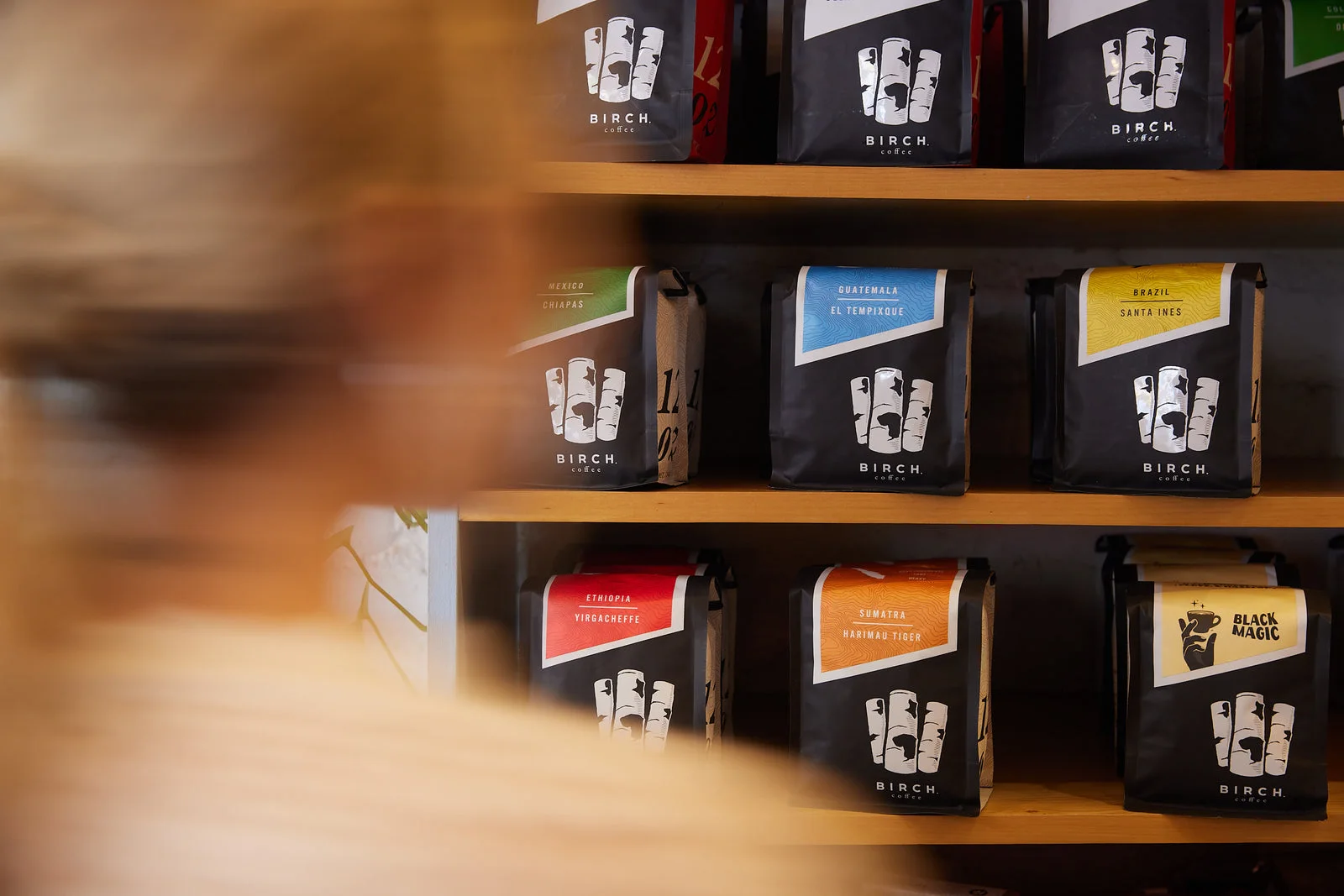
Birch already has what most online coffee brands spend years building: 15 cafes full of regulars, shelves in 19 Whole Foods stores and select Costcos, and a subscription built into its shop. What it doesn't have yet is traffic. Today Birch runs no ads on Facebook or Instagram.
Ad libraryChecked 15 Nov 2026
Meta Ad Library: Birch Coffee Facebook and Instagram, US
No ads live
Active ads in the US on 15 Nov 2026. Meta keeps no history of ended US ads, so past spend is unknown.
Everything a subscription business needs is built. What's missing is the traffic.
3
How we listen first.
Before we write a single ad, we read what coffee drinkers already say about Birch and the brands around it: reviews, Reddit threads, comments. Consilium, our research tool, sorts it into themes and weighs each one by how often it comes up and how strongly people feel. One angry review is one bad morning. A complaint that shows up in hundreds of reviews is the market talking.
What drinkers say, gathered from reviews and forums
Themes, weighed by how often and how strongly
One message for each kind of buyer
A page built for each message
We read four-star reviews hardest. A four-star review says exactly what would have made it five, and that gap is usually the offer.
4
How coffee brands lose money online.
Almost every coffee brand loses money on a new customer's first order. That part is normal. Brands fail when they never earn it back.
The first order
Order$60.00
Coffee, roasting, packing (48%)-$28.80
Fees and fulfilment-$9.00
Ad cost to win the customer-$40.00
First order-$17.80
Eightx's illustrative planning model: a $60 order at a 52% gross margin and a $40 ad cost. Not one company's results.
The same customer, a year on
Four orders in twelve months
Margin after costs, every order+$22.20
Ad cost, paid once-$40.00
Twelve months+$48.80
Same model. The profit is in the fourth order, so the whole game is getting customers there.
Vendor planning rangeChecked 15 Nov 2026
Coffee Brand Unit Economics: A 2026 Operator's Guide Eightx, 18 Jun 2026
Ad cost to win a food or drink customer: $45 to $53. On a $60 order the first order is minus $17.80; about 28% of cancellations come in the first three months
The page calls these 'planning bands, not category averages'; the worked example is illustrative.
Read the guideTap the screenshot for more of this source.
Paying more for a buyer than the first orders earn
The ad cost to win a food or drink customer runs $45 to $53 on Eightx's planning band. At Birch's prices a new subscriber's first three bags sell for $44.65 together (computed).
Selling one bag at a time
Eightx's worked example assumes a $60 order. One Birch bag is $19 to $23, so a single-bag order carries the full cost of winning the customer on a third of the money.
Putting the deepest discount where people leave
About 28% of cancellations come in the first three months on Eightx's planning band, and across 15,000+ subscription stores only 45% of subscribers were still there at six months, 33% at twelve. Birch's deepest discount, 25%, sits on the first two orders.
Trusting the ad platform's report over the store
Our read, not a statistic: ad platforms credit themselves generously. We count real orders in Birch's own store and match them to each ad.
Platform reportChecked 15 Nov 2026
State of Subscription Commerce 2023 Recharge
45% of subscribers still active at 6 months, 33% at 12 months
2022 data from 15,000+ stores on Recharge, all product types, not coffee alone.
The brands that make it are patient. Bean Box, an online coffee club, took more than a decade to get past half its revenue from subscriptions. Its average subscriber stays almost two years, and its CEO says new customers are “incredibly hard to come by.” Black Rifle, with all its fame, had 65,900 fewer subscribers at the end of 2025 than at the end of 2023 (computed from its filings).
Executive interviewChecked 15 Nov 2026
With high acquisition costs, Bean Box turns to its members for growth Chief Marketer, 5 Sep 2024
More than 50% of revenue from subscriptions, after more than a decade; the average subscriber stays almost two years; new customers 'incredibly hard to come by'
Bean Box CEO Matthew Berk. Bean Box is an online coffee club.
Most agencies take a share of ad spend: often 20 to 30% when spend is under $5,000 a month, and 10 to 15% above $50,000, plus a monthly minimum of $1,000 to $5,000. In a 2019 survey, half of search-ad agencies set that minimum at $1,000 to $3,000. Our fees sit inside that range.
So the difference isn't the price. It's what Birch gets for it, and how long the work keeps paying. A 2026 study found 25.9% of agency clients leave every year, after about 40 months on average. We plan to give Birch no reason to look elsewhere.
Vendor pricing guideChecked 15 Nov 2026
Agency Pricing in 2026 Swydo, updated 20 May 2026
Paid media fees: 20-30% of spend under $5,000 a month, 10-15% above $50,000; minimums $1,000 to $5,000 a month
A vendor's guide. The page names no source for its fee table.
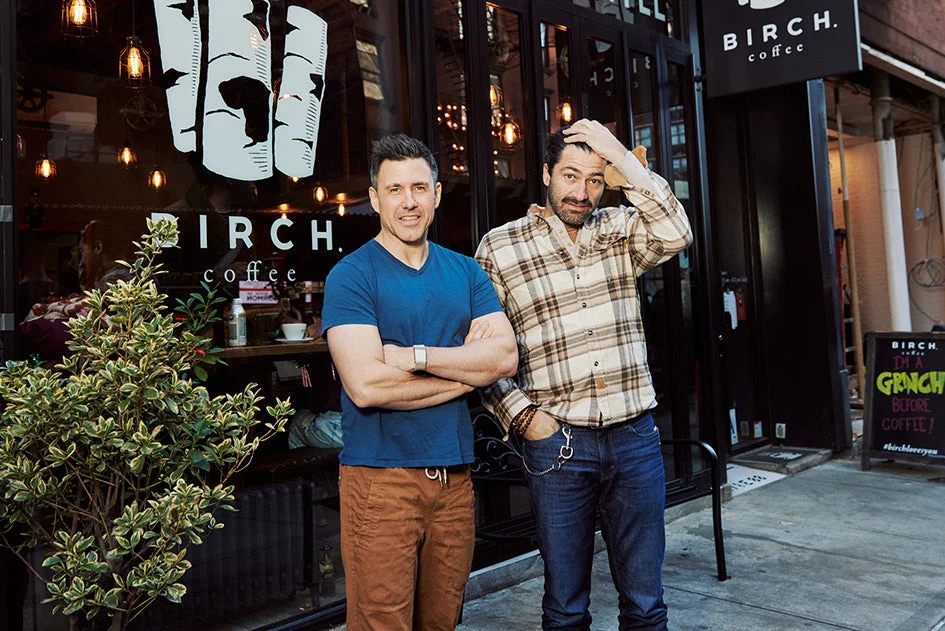
Birch's founders, Jeremy Lyman and Paul Schlader, as Birch's own About page shows them. Photo: Birch Coffee.
Seven things Birch gets from us
You work with the people you meet. Many agencies send their best people to win the account, then hand the work to a junior on a small salary with little experience. Not here. The people you meet are the people who do the work:
Robert Grant Lead strategist, expert creative director and copywriter
Bogdan Radu Lead strategist and conversion expert. Turns more of each visit into a sale
Yan Gozalvo Campaign manager. Has run and scaled campaigns profitably up to $75,000 a day
James Hagerty Strategist. Took Presto Coffee from 41 stores to 1,500
Behind these four stand our video editors, designers and a customer success manager who keeps every deadline on track. But these four make every decision on your account, and these four answer to you for the results. Meet them before you sign.
Ads in your customers' own words. We read what coffee drinkers already say about Birch and its rivals, and Consilium, our research tool, ranks it. Every ad starts from proven language, not guesswork.
An offer built to reach box three. That's where Birch's full subscription price starts, and where subscribers decide to stay.
A landing page for every message. The ad and the page tell one story, so fewer clicks are wasted.
Numbers you can trust. We count real orders in Birch's own store and match each one to the ad that won it, not to what the ad platform claims.
No surprises. A short note every week and a report every month: what worked, what didn't, what's next.
Your money protected. One small test first, with stop rules agreed before the first dollar.
6
The road to $10 million in three years.
Three years, three stages, each one earned by the last. Every step up in budget is decided by the same three numbers, agreed with Birch before the first dollar.
The three-year mapRevenue a year online, at today's prices
1Year
Prove it: a $3 million pace
About 7,700 subscribers
Turn cafe regulars into subscribers, then a paid test mostly in New York. Fix the offer so subscribers reach the third box. Scale only the arms that pass all three numbers.
2Year
Go national: about $8 million
About 19,000 subscribers
Take the winning messages and pages nationwide. Add bigger orders (two bags, the 2lb bag), gift subscriptions for the holidays, and new ad angles every month from what drinkers say.
3Year
Compound: $10 million and up
24,000 subscribers or more
Keep subscribers longer, win back the ones who leave, and push harder wherever Birch's shelves and cafes already are. By now most growth comes from customers ads won in years one and two.
Our planning path, not a promise: revenue pace is subscribers times about $416 a year at Birch's subscription prices. Every number resets with Birch's real data after the first 90 days.
The program pays for itself inside year one
Ad spend starts at $15,000 a month and climbs $5,000 a month, to a ceiling of $150,000. Climbing slowly keeps the cost of winning a first sale near $43; past $150,000 a month it rises, because bigger budgets reach colder buyers. That pace means Birch never carries a big hole.
The money in, and when it comes backour planning numbers
1Most Birch has in at once
About $110,000, at month 6. That includes ads, creative, landing pages and our fees.
2First profitable month
Month 7. From here each month's subscribers pay for the next month's growth.
3All the money back
By month 12. Year 1 ends about even; year 2 returns about $1.1 million and year 3 about $2.7 million.
Built on five assumptions we test in the first 90 days: about 200 new subscribers a month from Birch's own cafes, 6 in 10 first buyers choosing the subscription, a first sale costing about $43, Amazon going live from day one, and two bags in every delivery. That last one matters most: ship one bag at a time and shipping per bag doubles, cutting what each subscriber earns Birch roughly in half.
People already search Amazon for Birch. Other brands are selling to them.
Search Amazon for “birch coffee” today and you won't find a Birch bag you can buy. Birch's two old listings, a French Press blend and a Colombian Decaf, both show “Currently unavailable”, and a search filtered to the Birch Coffee brand returns nothing. Meanwhile other roasters, such as Lifeboost, Counter Culture and Brooklyn Roasting Company, pay for the top ads on the search “birch coffee”. People already look for Birch on Amazon, and today other brands sell to them.
Our Meta ads will send more of those people to Amazon. So Birch goes live on Amazon from day one, with branded search ads that protect its own name. Amazon takes time to build: it needs a solid base of reviews, all 4.5 stars or higher, before it sells at full strength, and those reviews have to be earned within Amazon's rules. We plan for it to grow over the first nine months, not to arrive on day one.
One partner can bring customers, ads and reviews at the same time
The right partners can make this take off quickly from an early start. One partnership brings traffic, content for new ads and Birch's first Amazon reviews at the same time, which shortens the slow early months.
For buyers aged 50 and over this can be especially strong. Well-known authors and actors from their younger years still feel like heroes to this audience, and many will make a short video for a modest fee. We would test this as its own audience, with a clear paid-partnership label on every video and written rights for how the video is used in ads.
Six months of online sales opens the door to Target and Costco
Before a big retailer gives a brand shelf space, it asks one question: does it sell? Six months of steady online sales answers it with numbers, not hope. That is how James took Presto from 41 stores to 1,500.
The prize is large even at a slow pace. A bag that sells just twice a day in each store sells 730 bags a store a year.
Birch is already in select Costcos in New York, New Jersey and Connecticut. Going national is the next step, not a leap.
Year one starts with one small test
The test cardEach stage earns the next stamp
1Regulars
Turn regulars into subscribers
Weeks 1 to 3. No ad spend.
Birch's app, its email list, a card at every register, gift subscriptions. This sets the baseline: how many cafe regulars subscribe, and how many take a third box.
2Paid
A paid test, mostly in New York
Weeks 4 to 9.
About three quarters of the budget around New York, where Birch's cafes and its Whole Foods and Costco shelves already are; about a quarter nationwide, to learn what strangers do. Six weeks, so the first subscribers from ads reach their third delivery inside the test.
3Scale
Scale what passes
From week 10.
Each arm grows only while it passes all three numbers. The national arm overtakes New York only by beating it on cost.
Why New York first: when a retailer opens a store, online sales in the area around it rise, by 6.9% on average across 2,103 stores in one industry study, and by 13.9% for newer direct brands. People who see Birch on the corner are the cheapest people to reach online. And a cafe roaster that saw a “dramatic increase” in online subscriptions found it came mainly from its own cafes' customers.
Industry studyChecked 15 Nov 2026
The Halo Effect III: Where the Halo Shines ICSC, 12 Dec 2023
A new store lifted online sales nearby by 6.9% on average, 13.9% for newer direct brands
69 retailers and 2,103 stores. Store openings, not ad tests.
The three numbersagreed with Birch before the first dollar
1Cost to win a subscriber
No more than Birch's margin on that subscriber's first three bags. At today's prices those bags sell for $44.65; Birch's margin per bag sets the exact line at kickoff.
2Third-box rate
Subscribers from ads take a third box at least four times in five as often as subscribers from the cafes do in stage 1.
3New to Birch
More than half of each arm's subscribers aren't already on Birch's email or app lists. Otherwise the ads are paying for customers the cafes would have brought for free.
Any number missed two weeks running pauses that arm. All three held two weeks running earns the next budget step.
What we'd need from Birch
Access to Shopify and the Meta ad account, to set up tracking before any spend
Margin per bag, and what shipping costs
Twelve months of subscription starts, skips and cancellations
The size of the app and email lists
A card or sign at each register for stage 1
7
The offer.
Two offers, really. One for Birch's customers, built so they reach the third box without being trained on discounts. One for Birch, built so the risk sits with us.
For Birch's customers: the Birch Regulars Club
Discounts bring in bargain hunters who leave when the discount ends. So instead of cutting the price, we add things only Birch can give. These are the pieces we'd test, each agreed with Birch before launch:
Full-price subscription, no deep discount. The value comes from what's added, not what's taken off.
Lead with every 4 weeks, two bags in the box. Birch already lets subscribers choose every 2 or every 4 weeks, but the page leads with every 2 weeks. We would flip that. A box once a month is an easy yes. Fewer deliveries to wait for, fewer boxes to deal with, and a schedule that fits how people already shop. It feels like a small, simple commitment, so it is easier to start and easier to keep. And because one box carries two bags, Birch pays half the shipping on every bag. That keeps about $13 a month from each subscriber instead of about $6, and pays for the free cafe drink below.
The cafe perk. Subscribers get a free drink at any Birch cafe with each delivery. No online-only brand can offer this.
The third-box gift. Something worth keeping arrives with box three, the point where most subscribers decide to stay.
The shelter dogs. Every bag helps New York dog shelters, so staying subscribed means something.
The taste promise. Don't love a bag? Tell us and the next one is a different coffee, free.
Founding members. The first subscribers after the January relaunch keep their price for as long as they stay.
The office tier. 5lb bags on a schedule for office managers, who already buy them.
Our terms for Birchthe risk sits with us
1Landing pages before launch
Four landing pages at $1,500 each, built before the first dollar of ad spend, so every ad has a page that tells the same story. Three is the minimum; we recommend four.
2Simple monthly fees
A $5,000 monthly retainer plus 10% of ad spend. Creative is its own line: we recommend the $10,000 monthly package, about 120 video-first ads a month (the bare minimum is $5,000, which we don't advise). As spend scales, Birch moves to a larger creative package, because more spend needs more ads. Shoots, creator videos and new landing pages are quoted up front, and more landing pages come as spend grows. No share of revenue.
3Renewal is earned
The first term runs until we hit a benchmark agreed with Birch up front. Only then do we renew for six months.
4The week-9 guarantee
If the three numbers aren't hit by week 9 of the test, Birch pays no $5,000 retainer and no ad spend fee for the following month. We keep working. Creative and landing pages are still billed as normal.
5Speed you can check
New ads running within 10 days of kickoff. Video ads ready by week 3.
6One partner, not another vendor
Monthly strategy plan for sign-off, a call every two weeks, one shared scoreboard of ads and email side by side.
Plus an introduction to James Hagerty, who took Presto from 41 supermarket stores to 1,500, for when Birch wants more shelves.
One hour to see whether this fits both ways. We'll bring the first messages we'd test and a draft of the subscription page.
calendly.com/robertrgm/60min-1
P.S. Every number in this plan sits in a live model. Put in Birch's real costs before our call, and we'll walk through what you find.
Robert Grant, Bogdan Radu, Yan Gozalvo and James Hagerty, Reach Global Media
Sources and how to read them
Everything was checked on 15 November 2026. Figures are quoted with their source and window. Planning ranges are marked as planning ranges. “Computed” means we did the arithmetic from the cards shown. Ad counts are what Meta's public Ad Library showed for active US ads that day; they move daily and count ads, not spend. Photos on the cover and in part 5 are Birch's own, from its website.
National Coffee Data Trends, Spring 2025, National Coffee Association, 15 Apr 2025. Link
BRC Inc. fourth quarter and fiscal 2024 results (8-K, exhibit 99.1), Black Rifle Coffee, 3 Mar 2025. Link
BRC Inc. fourth quarter and fiscal 2025 results (8-K, exhibit 99.1), Black Rifle Coffee, 2 Mar 2026. Link
Birch Coffee: who we are, wholesale.birchcoffee.com. Link

 Prepared for Birch Coffee

 National Coffee Association.
 Black Rifle Coffee is the nearest thing to a public scorecard for coffee sold online. Its own-site sales fell from $143.2 million in 2023 to $117.6 million in 2025, and its subscribers from 225,800 to 159,900. Over the same two years its sales through stores and distributors grew from $225.1 million to $258.0 million.